

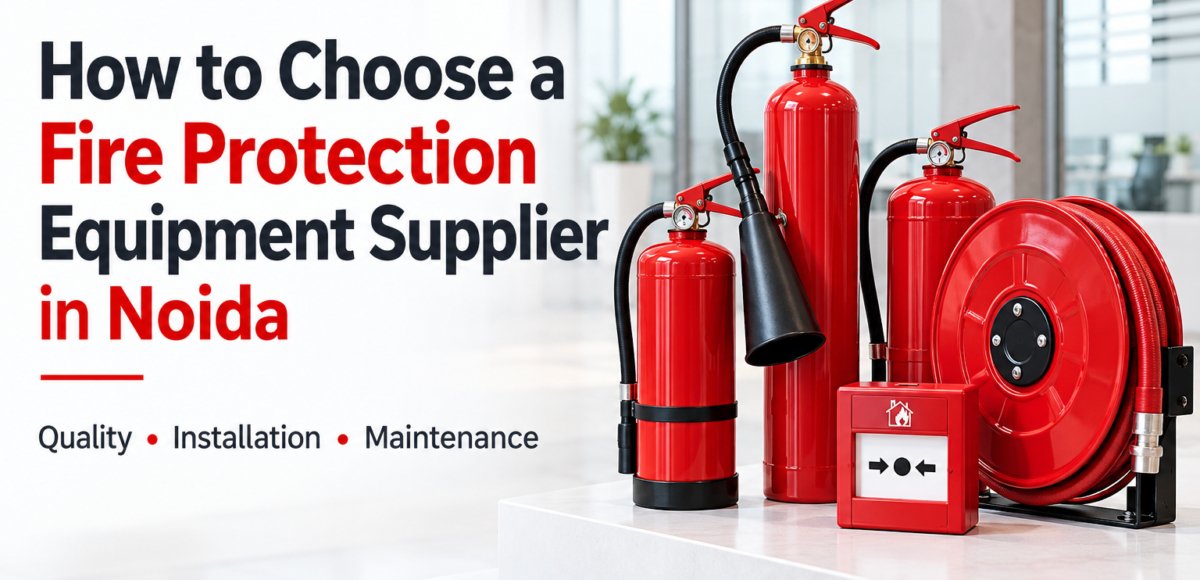
How to Choose a Fire Protection Equipment Supplier in Noida
Choosing fire protection equipment is an important responsibility for any business owner, facility manager or building administrator. The products you purchase must suit the risks within your premises, and the supplier should explain how those products will be installed, inspected and maintained.
A fire extinguisher selected without understanding the hazards may be unsuitable for its intended location. Similarly, an alarm system supplied without proper planning can leave gaps in detection or create maintenance difficulties.
When selecting a Fire Protection Equipment Supplier in Noida, look beyond the product catalogue and initial quotation. Assess the supplier’s technical knowledge, product documentation, installation arrangements and ongoing service support.
This guide explains the practical questions to ask before purchasing equipment for an office, factory, warehouse, retail outlet or residential building.
1. Start by Understanding Your Building’s Fire Risks
Before approaching suppliers, prepare a clear description of your premises and how people use them. This helps suppliers provide relevant recommendations and makes their quotations easier to compare.
Useful information includes:
- Building use and number of occupied floors.
- Approximate floor area and internal layout.
- Number of employees, visitors or residents.
- Materials stored or handled on the premises.
- Electrical rooms, kitchens and production areas.
- Existing fire protection installations.
- Planned construction, expansion or refurbishment.
An office with workstations and a pantry has different hazards from a workshop handling combustible materials. Even within one building, a storage area and an electrical equipment room may require different protection.
Ask prospective suppliers whether they conduct a site visit and who evaluates the findings. For complex premises, involve a qualified fire safety professional in the assessment and system design.
A useful first question is: “What information do you need before recommending equipment for this building?”
A considered answer should address the premises, its hazards and the existing arrangements.
2. Check Whether the Supplier Explains Product Suitability
A knowledgeable fire safety equipment supplier should explain why each proposed product belongs in your building.
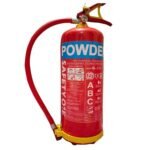
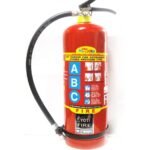
For portable extinguishers, ask about the extinguishing medium, capacity, fire rating and suitability for the identified hazards. Buying several cylinders of the same size does not automatically provide appropriate protection.
The BIS product manual for IS 15683:2018 distinguishes portable extinguishers by characteristics including extinguishing medium, nominal capacity, fire rating and operating temperature. These details provide a stronger basis for comparison than cylinder appearance alone.
Request written answers to questions such as:
- Which hazards is this model intended to address?
- What fire rating does the proposed extinguisher carry?
- Are there restrictions on its use?
- Is it suitable for the environmental conditions at the location?
- Why has this capacity been recommended?
Avoid accepting broad statements such as “this extinguisher works everywhere.” The recommendation should relate to the actual product specifications and your premises.
3. Verify Product Standards and Certification Claims
Product documentation deserves careful attention when purchasing fire safety equipment in Noida.
Ask for the manufacturer’s name, exact model number, technical data sheet and applicable certification details. Where BIS certification applies, check the relevant Standard Mark and licence information.
BIS provides a “Verify Licence Details” feature through its BIS Care app to help users check the authenticity of products carrying its mark.
Do not rely only on a certificate displayed in a brochure. Confirm that the documentation relates to the manufacturer and product being supplied.
Also distinguish between different types of credentials. A supplier’s business registration or management-system certificate does not, by itself, establish that every product in its catalogue meets the required product standard.
Before placing an order, request:
- Product identification and model details.
- Relevant standard and certification information.
- Manufacturer’s technical literature.
- Warranty terms.
- Operating and maintenance instructions.
- Traceable invoice and delivery documentation.
Clear records make future servicing, replacement and warranty discussions easier.
4. Assess the Supplier’s Experience with Similar Premises
Experience is useful when it is relevant to your project.
A supplier familiar with small retail outlets may have a different service capability from a contractor installing integrated systems in a large industrial building. Ask about projects involving similar building uses, hazards and installation complexity.
Questions worth asking include:
- Have you supplied equipment for premises like ours?
- What was your role in those projects?
- Did your scope include installation and commissioning?
- Can you provide references with the customer’s permission?
- Who will provide technical support for our project?
Be specific about the supplier’s role. Supplying products, designing systems and maintaining installations are separate responsibilities. Confirm which activities the business performs directly and which it assigns to other parties.
A dependable supplier should explain its capabilities and limitations clearly.
5. Review the Equipment Range Against Your Requirements
A broad catalogue can be convenient, but suitability matters more than the number of products available.
Depending on the assessed requirements, your project may involve portable extinguishers, detection and alarm equipment, hose reels, hydrant components, sprinklers, pumps, emergency lighting or safety signage.
When comparing fire protection systems in Noida, ask suppliers to explain the purpose of each proposed system and how it relates to the overall protection plan.
| Equipment category | What to clarify with the supplier |
|---|---|
| Portable extinguishers | Medium, fire rating, capacity, placement and servicing arrangements |
| Detection and alarm equipment | Design basis, device suitability, compatibility and testing |
| Hydrant and hose reel equipment | Approved design requirements, components and installation scope |
| Sprinkler systems | Design responsibility, component specifications and commissioning |
| Emergency lighting and signage | Required locations, visibility, power arrangements and maintenance |
This table is a purchasing guide, rather than a complete equipment schedule. The final selection should follow the building’s assessed needs and applicable requirements.
6. Confirm Installation and Commissioning Responsibilities
Equipment delivery is one stage of the work. Before accepting a quotation, establish who will install, test and hand over the equipment.
Ask whether the price includes mounting brackets, cabinets, wiring, pipework, fittings, labour and making good after installation. Identify exclusions early so that essential work does not become an unexpected additional charge.
For system installations, clarify:
- Who prepares and reviews the design?
- Who carries out installation?
- What inspections and tests are included?
- Who records and resolves defects?
- What documents will be handed over?
- Who explains the system to the building’s responsible staff?
Ask for a commissioning plan appropriate to the installation. Agree on the evidence you will receive, such as test records, equipment schedules, drawings and operating instructions.
The scope should be clear enough that both parties understand what a completed installation means.
7. Check Compatibility with Existing Systems
If you are expanding or replacing part of an existing installation, compatibility needs particular attention.
For example, a proposed detector or alarm device should be checked against the existing panel’s documented compatibility requirements. A component that looks similar may have different technical requirements.
Provide the supplier with available drawings, model numbers and maintenance records. Ask whether the proposed change affects other parts of the installation.
The supplier should identify:
- Components that can remain in service.
- Items requiring replacement.
- Compatibility checks needed before ordering.
- Testing required after the modification.
- Any expected interruption to protection.
Avoid approving substitutions solely because they are available sooner or cost less. Require technical review and written acceptance before changing specified products.
8. Evaluate Maintenance and Refilling Support
A fire extinguisher supplier in Noida should explain what happens after the initial purchase.
Ask who performs inspections, servicing, refilling and any required testing. Confirm whether the work is completed by the supplier or a separate service provider.
Request a maintenance proposal that states:
- Equipment covered.
- Inspection and service activities.
- Visit arrangements.
- Fault-reporting procedure.
- Replacement-part charges.
- Refilling and testing exclusions.
- Service records provided after each visit.
Do not assume every extinguisher needs the same work at the same interval. Ask for a schedule based on the equipment type, manufacturer’s instructions, applicable requirements and operating conditions.
Also clarify how protection will be maintained while equipment is removed for servicing. Agree on suitable temporary arrangements before the work begins.
9. Understand Local Service Availability
Local availability can make site visits and maintenance coordination easier. However, an address in Noida does not establish how quickly a supplier will attend your premises.
Ask practical questions about service coverage:
- Where are the technicians based?
- Which areas do they cover?
- What are the normal service hours?
- How are urgent faults prioritised?
- Are commonly required spare parts available?
- What happens if the assigned technician is unavailable?
Request written response arrangements where service continuity is important.
Supplier maintenance support should also be distinguished from the building’s emergency response arrangements. Staff need to know how to raise an alarm, evacuate and contact emergency services without waiting for a maintenance technician.
10. Clarify Documentation and Approval Support
When choosing a Fire Protection Equipment Supplier in Noida, ask what assistance is available with equipment records, drawings and inspection documentation.
Uttar Pradesh Police’s official website identifies a Fire Services NOC service. This reinforces the need to distinguish supplier documentation from approval issued through the relevant authority.
A supplier may help prepare technical information, but you should establish the exact scope of that assistance. Ask who will confirm the requirements applicable to your building and who is responsible for submitting documents.
Be cautious about unconditional promises of approval. Require a clear explanation of the work included, the authority involved and any dependencies.
Keep a central record of equipment purchases, installation documents, inspection findings and maintenance actions. These records support continuity when facility staff or service providers change.
11. Compare the Full Cost of Ownership
A low purchase price can become expensive if installation, servicing or replacement costs are unclear.
Compare quotations using the same specifications and scope. Ask suppliers to separate the following costs:
- Equipment and accessories.
- Installation labour.
- Testing and commissioning.
- Documentation and handover.
- Training or demonstrations.
- Maintenance.
- Consumables and spare parts.
- Taxes, transport and other charges.
Check whether the quoted models, quantities and ratings match across proposals. If one supplier recommends a substantially different scope, ask for the technical reason before comparing totals.
The aim is to understand what you are paying for and what you will need to fund later.
12. Ask About Staff Familiarisation
Include staff familiarisation in the purchasing discussion.
Ask whether the supplier can explain equipment locations, warning indicators, fault reporting and the maintenance responsibilities assigned to your team. Where practical training is required, confirm who delivers it and what it covers.
Training should support the building’s emergency plan. It should make clear that evacuation and personal safety take priority, and that equipment use depends on training and safe conditions.
Request attendance records and relevant handover material so new staff can be briefed consistently.
Common Mistakes to Avoid
Several purchasing mistakes are easy to prevent:
- Ordering equipment before assessing the premises.
- Choosing products based only on price or cylinder capacity.
- Accepting certification claims without verification.
- Leaving installation responsibilities undefined.
- Approving substitutions without technical checks.
- Signing a maintenance contract without reading exclusions.
- Assuming equipment supply includes authority approval.
- Failing to retain product and service records.
Use a written checklist during supplier discussions. This makes it easier to identify gaps before committing to an order.
Make a Clear, Informed Supplier Decision
The right Fire Protection Equipment Supplier in Noida should provide recommendations you can understand, specifications you can verify and a service scope you can review.
Assess the complete proposal: suitability, documentation, installation, commissioning, maintenance and future support. A clear explanation of these areas is more useful than a broad promise of complete safety.
For your next purchase, discuss your building’s requirements with Innovative Fire Protection. Share the premises layout, existing equipment details and known hazards, and request an itemised proposal covering the products and services needed. Confirm the technical specifications, responsibilities and maintenance arrangements before placing your order.


Leave a Comment