



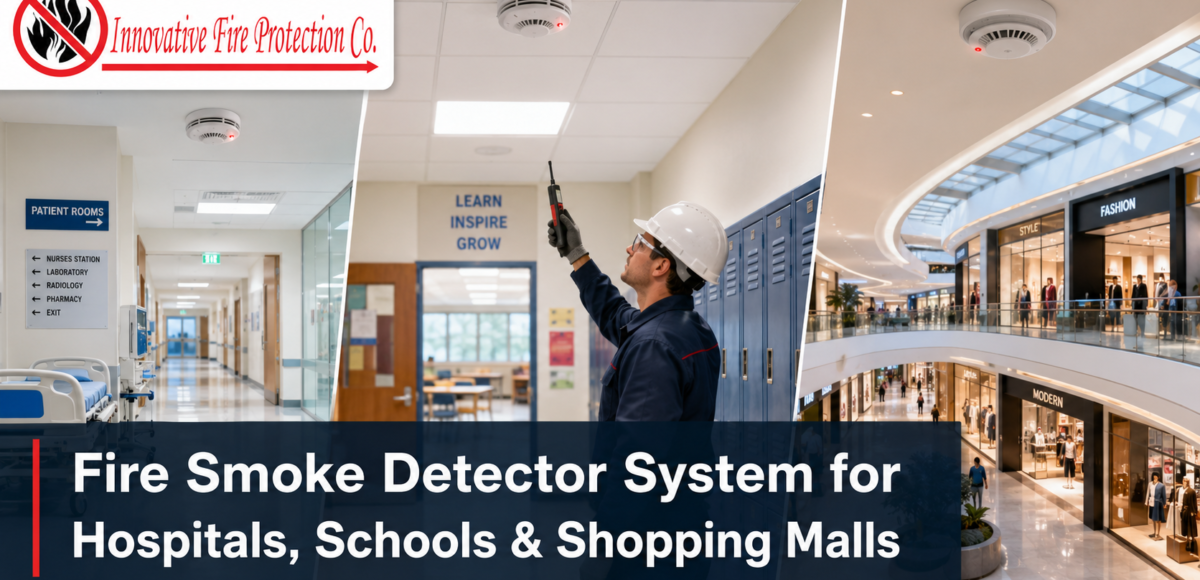
Fire Smoke Detector System for Hospitals, Schools and Shopping Malls
Why Hospitals, Schools and Malls Need Reliable Smoke Detection Systems
A fire can develop within minutes, but smoke may travel through a building even faster. In busy public buildings such as hospitals, schools and shopping malls, delayed detection can put hundreds of people at risk. Installing a reliable fire smoke detector system is therefore not simply an equipment requirement—it is an essential part of protecting lives, property and business continuity.
Hospitals contain patients who may not be able to evacuate without assistance. Schools are responsible for children who may panic during an emergency. Shopping malls have large, changing crowds who may be unfamiliar with emergency exits. Each environment has different risks and requires a carefully designed fire detection and alarm system.
Innovative Fire Protection provides professional fire safety solutions for commercial and institutional properties. From site assessment and system planning to installation, testing and maintenance, every stage should be handled according to the building’s size, occupancy, layout and fire-risk profile.
What Is a Fire Smoke Detector System?
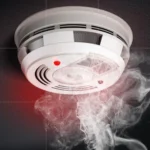
A fire smoke detector system is designed to identify smoke or other early indications of a fire and communicate a warning through a fire alarm system.
A complete system may include:
- Smoke detectors
- Heat detectors
- Multi-sensor detectors
- Manual call points
- Fire alarm control panel
- Hooters, sounders and visual alarm devices
- Repeater or annunciator panels
- Power supply and backup batteries
- Monitoring and communication modules
- Interfaces with lifts, access controls and ventilation systems
When a detector senses smoke, it sends a signal to the control panel. The panel identifies the affected zone or device and activates the programmed alarm response. Depending on the system design, this may include audible alarms, flashing lights, lift recall, door release, ventilation control or notification to authorised personnel.
A smoke detector is only one component of the overall arrangement. Effective protection depends on correct detector selection, positioning, wiring, programming, alarm visibility, evacuation planning and periodic testing.
Why Is Early Smoke Detection Important?
Fire does not always begin with visible flames. Electrical faults, overheating equipment, damaged wiring or smouldering materials may initially generate smoke. A properly selected detector can identify this condition before the fire becomes difficult to control.
Early detection provides more time to:
- Warn occupants and visitors
- Notify security and facility teams
- Begin an organised evacuation
- Move vulnerable people to safer areas
- Investigate the source of the alarm
- Activate the building’s emergency plan
- Contact the fire and emergency services
- Limit the spread of smoke and fire
The National Disaster Management Authority’s fire-safety guidance recommends smoke alarms on every building level and regular alarm testing. However, the final design for a hospital, school or mall must be based on applicable building regulations, fire-safety requirements and instructions from the relevant authority.
Fire Smoke Detector Systems for Hospitals
Hospitals are among the most sensitive environments for fire-safety planning. Patients may be sleeping, unconscious, connected to medical equipment or unable to walk. Intensive care units, operating areas, laboratories, pharmacies, kitchens, electrical rooms and medical storage spaces can present different fire hazards.
Unlike a typical office evacuation, a hospital may require phased or horizontal movement of patients to another protected area. This makes quick and accurate information critical.
Important areas requiring assessment
A hospital fire detection survey should examine:
- Patient rooms and wards
- Corridors and nursing stations
- Intensive care and critical-care areas
- Operation theatres and recovery areas
- Pharmacies and medicine stores
- Laboratories
- Electrical and UPS rooms
- Server and communication rooms
- Kitchens and cafeterias
- Basements and parking areas
- Laundry and linen storage
- Medical-record rooms
- Waiting and reception areas
The right detector must be selected for each location. A standard smoke detector may be suitable in many clean indoor areas, while heat or specialised detection may be more appropriate in places where steam, dust or routine activity could cause unwanted alarms.
Why addressable detection is useful in hospitals
Large hospitals often benefit from addressable fire alarm systems. In an addressable system, each connected detector or device has a unique identity. The control panel can therefore show the precise device or location that has initiated the alarm.
This information helps hospital staff identify the affected area quickly and make better decisions about patient movement, internal communication and emergency response. Addressable systems can also make fault identification and maintenance more manageable in large facilities.
Hospitals should not rely only on audible alarms. Visual alarm devices, control-room indicators and planned staff communication may also be needed because some occupants may have hearing impairments or may not be able to respond independently.
Fire Smoke Detector Systems for Schools
Schools require fire-safety systems that can provide a clear warning without creating unnecessary confusion. Children may not understand the danger immediately, and younger students often depend entirely on teachers and staff for safe evacuation.
A school system should provide early detection and an alarm signal that can be recognised throughout classrooms, corridors, activity areas and administrative spaces.
Priority locations in schools
Important areas may include:
- Classrooms
- Libraries
- Laboratories
- Computer rooms
- Auditoriums
- Staff rooms
- Administrative offices
- Electrical rooms
- Storage rooms
- Canteens and kitchens
- Indoor sports areas
- School buses’ parking or basement areas
- Hostels and sleeping accommodation, where applicable
Laboratories, kitchens and workshops require special attention because heat, fumes, steam or dust can affect detector performance. A qualified fire-safety professional should assess the actual environment before choosing the detector type.
Detection must be supported by preparedness
Installing detectors does not make a school fully prepared. Teachers, administrators, security staff and support personnel must understand what to do when the alarm activates.
Schools should conduct planned fire drills and ensure that:
- Escape routes remain unobstructed
- Exit signs are clearly visible
- Assembly areas are predetermined
- Attendance is checked after evacuation
- Staff members assist young children and persons with disabilities
- Nobody returns to the building without authorisation
- Alarm and emergency procedures are reviewed periodically
The alarm must be audible in occupied areas, including noisy activity rooms. Where required, visual alarm devices can improve warning coverage.
Fire Smoke Detector Systems for Shopping Malls
Shopping malls are complex public spaces with high and continuously changing occupancy. Visitors usually do not know the building layout, nearest staircase or designated assembly point. Malls may also contain retail shops, food courts, cinemas, restaurants, storage rooms, escalators, lifts, atriums and multi-level parking.
The combination of crowd density, combustible merchandise and varied activities makes reliable detection essential.
Fire-risk areas in a shopping mall
A mall fire-detection design should consider:
- Retail stores and showrooms
- Food courts and commercial kitchens
- Multiplex and entertainment areas
- Atriums and common corridors
- Electrical and control rooms
- Server and CCTV rooms
- Storage and loading areas
- Basements and parking levels
- Waste-collection areas
- Generator and utility rooms
- False ceilings and service spaces
- Escalator and lift areas, where applicable
High ceilings and atriums require careful detector planning because smoke movement can be affected by height, air conditioning and the shape of the space. Conventional point-type detectors may not be suitable for every location. Depending on the assessed risk, beam detectors, aspirating detection or other specialised technologies may be considered.
Mall alarms should be coordinated with trained security and facility teams. Emergency announcements must be clear and controlled so that visitors can be guided toward safe exits without panic.
Types of Detectors Used in Public Buildings
Photoelectric smoke detectors
Photoelectric detectors identify smoke through changes in a light-sensing chamber. They are commonly considered for locations where a smouldering fire may generate visible smoke before open flames develop.
Heat detectors
Heat detectors respond to a fixed temperature or a rapid rise in temperature. They may be considered in areas where normal smoke, vapour or dust could cause false alarms in an ordinary smoke detector.
However, heat detectors generally respond differently from smoke detectors and should not automatically be treated as a substitute. Selection must be based on the area’s risks and applicable requirements.
Multi-sensor detectors
Multi-sensor detectors analyse more than one fire-related condition, such as smoke and heat. They may help improve detection reliability in appropriate environments, subject to proper product selection and programming.
Beam smoke detectors
Beam detectors monitor the obscuration of a light beam over a larger distance. They are often evaluated for large open spaces, warehouses, auditoriums and atriums where point detectors may be difficult to install or maintain.
Aspirating smoke detection systems
An aspirating system continuously draws air through sampling pipes and analyses it for smoke particles. It can provide sensitive detection for certain critical or difficult-to-access locations, such as server rooms and specialised hospital areas.
Conventional vs Addressable Fire Alarm Systems
A conventional fire alarm system divides a property into zones. When a device activates, the panel indicates the affected zone but may not identify the exact detector.
An addressable system identifies individual connected devices and can provide more detailed event and fault information.
Conventional systems may be appropriate for certain smaller, simpler properties. Addressable systems are generally more suitable for large hospitals, multi-building schools and shopping malls because precise location information can support faster investigation and system management.
The final choice should not be based on price alone. Building size, number of devices, expansion plans, maintenance needs and emergency-response requirements should all be considered.
Planning and Installation Process
A dependable system begins with a professional site survey. Buying detectors without a coordinated design can result in uncovered areas, inappropriate device selection or frequent unwanted alarms.
A systematic project generally includes:
- Site assessment: Review the building layout, occupancy, ceiling height, room usage and potential hazards.
- Risk evaluation: Identify sensitive locations, ignition sources and areas where smoke movement may be restricted.
- System design: Determine detector types, device locations, panel capacity, zoning, cable routes and alarm coverage.
- Equipment selection: Choose suitable, compatible and appropriately approved equipment based on the project requirements.
- Professional installation: Install devices according to the approved design and manufacturer’s instructions.
- Programming and integration: Configure device addresses, alarm logic, control functions and required system interfaces.
- Testing and commissioning: Test detectors, manual call points, sounders, visual indicators, panel functions, backup power and system integrations.
- Documentation and training: Provide relevant drawings, device schedules, test records and basic operating guidance to authorised staff.
The Bureau of Indian Standards’ National Building Code page identifies fire and life safety as an important part of building planning, including provisions for complex buildings, high-rises, atriums, commercial kitchens and parking facilities.
Because requirements can vary with occupancy, height, floor area and local approval conditions, owners should confirm the applicable design with qualified professionals and the competent fire authority.
Maintenance Is as Important as Installation
Detectors can be affected by dust, paint, renovation debris, environmental conditions, battery deterioration, wiring faults or accidental damage. A system that has not been inspected may fail to provide the expected warning.
Routine maintenance should include:
- Visual inspection of detectors and devices
- Functional detector testing
- Manual call-point testing
- Sounder and visual-alarm checks
- Fire alarm panel inspection
- Battery and power-supply checks
- Fault-history review
- Verification of device labels and zones
- Cleaning where required
- Recording all tests, faults and corrective actions
Testing frequency and methods should follow the applicable standard, approved maintenance plan, manufacturer’s instructions and authority requirements. Building owners should avoid painting over detectors, blocking them with decorations or changing room layouts without reviewing detection coverage.
Fire Smoke Detector System in Noida
Installing a reliable Fire Smoke Detector system in Noida is essential for hospitals, schools and shopping malls where large numbers of people may be present every day. Innovative Fire Protection offers customised solutions based on the property’s layout, occupancy, fire risks and operational requirements. The team supports clients with site assessment, system design, equipment selection, professional installation, testing and maintenance. Whether you are constructing a new facility or upgrading an existing alarm system, a professionally planned Fire Smoke Detector system in Noida can provide early warning, support faster emergency response and strengthen the building’s overall fire-safety preparedness.
Choose Innovative Fire Protection
Hospitals, schools and shopping malls require more than individual smoke alarms. They need a coordinated fire detection system designed around occupancy, building layout, operational risks and evacuation challenges.
Innovative Fire Protection offers fire-safety system assessment, planning, supply, installation, testing and maintenance support for institutional and commercial properties. Our approach focuses on appropriate system selection, dependable installation and practical after-sales support.
If you are planning a new facility, upgrading an old fire alarm system or reviewing the safety of an existing building, begin with a professional site assessment. The right fire smoke detector system can provide valuable early warning—but it must be correctly designed, installed, tested and maintained to remain dependable.


Leave a Comment