








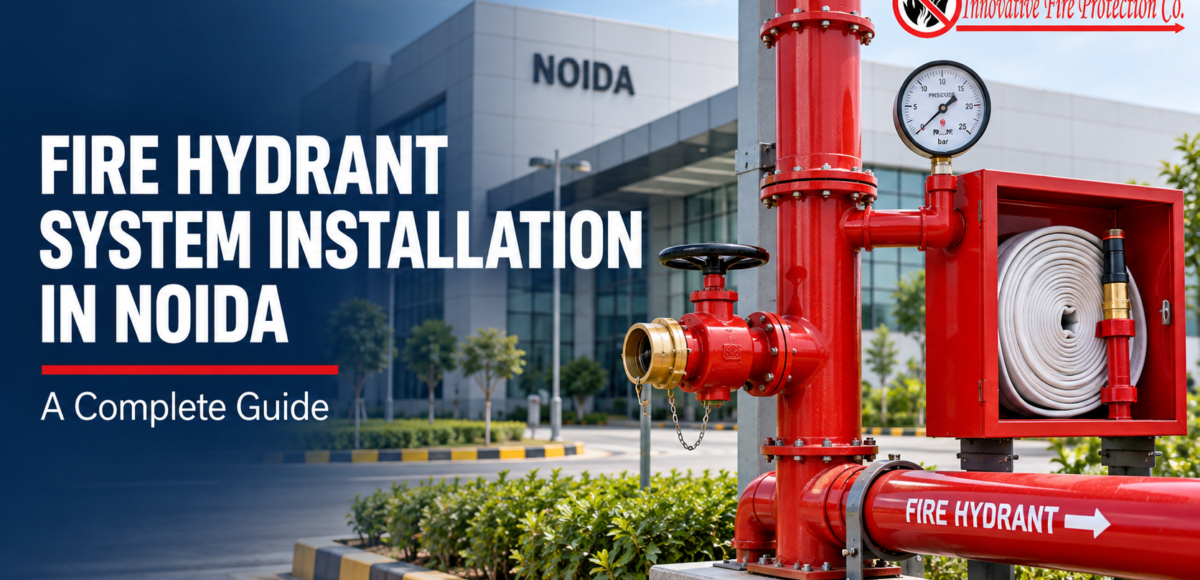
Fire Hydrant System Installation in Noida
Fire Hydrant System Installation in Noida: A Complete Guide
Fire safety is a critical requirement for factories, warehouses, offices, hospitals, schools, residential societies and commercial buildings. Among the various fire-protection arrangements available, a fire hydrant system plays an essential role in controlling large fires before they spread across a property.
A properly designed hydrant system in Noida provides firefighters and trained emergency-response teams with a continuous supply of water at adequate pressure. However, installing a few pipes, valves and hose reels is not enough. The system must be carefully designed according to the building’s size, height, occupancy, fire risk and applicable safety requirements.
This guide explains how fire hydrant systems work, their major components, installation process, testing requirements and maintenance practices.
What Is a Fire Hydrant System?
A fire hydrant system is a network of water-storage tanks, pumps, pipes, valves and firefighting outlets installed throughout a building or industrial property. During a fire emergency, trained personnel connect a fire hose to the nearest hydrant valve and direct a powerful stream of water towards the affected area.
Unlike portable fire extinguishers, which are generally used during the initial stage of a small fire, hydrant systems are designed to manage larger incidents. They can continuously deliver water as long as the storage tank and pumping arrangement remain operational.
A professionally installed hydrant system in Noida may include internal hydrants, external yard hydrants, hose reels and fire brigade connections, depending on the nature of the property.
Why Is a Fire Hydrant System Important?
Fire can spread rapidly in buildings containing combustible materials, machinery, electrical equipment, chemicals, furniture or stored goods. A hydrant system helps emergency teams respond quickly without waiting for an external water source.
Its major benefits include:
- Continuous supply of firefighting water
- Coverage across different floors and building areas
- High-pressure water delivery
- Faster response during emergencies
- Support for trained internal fire teams
- Easy access for the local fire brigade
- Protection of people, property and business operations
- Better preparedness for fire-safety inspections
Noida has a wide range of industrial units, high-rise buildings, shopping complexes, institutions and warehouses. Each property has a different risk profile. Therefore, the design of a hydrant system in Noida should be based on a detailed site survey rather than a standard one-size-fits-all layout.
Types of Fire Hydrant Systems
1. Internal Hydrant System
An internal hydrant system is installed inside the building. Hydrant valves are usually placed near staircases, corridors, lobbies or other accessible locations. Fire hoses can be connected to these valves to fight a fire from a safe distance.
Internal systems are commonly required in:
- High-rise buildings
- Office complexes
- Hospitals
- Hotels
- Shopping centres
- Educational institutions
- Large residential buildings
2. External Hydrant System
An external or yard hydrant system is installed around the exterior of a property. Underground or above-ground pipelines connect the water source to hydrant posts positioned at selected points.
External hydrants are particularly useful for factories, warehouses, logistics facilities and properties spread across large areas. They allow firefighting teams to access water without entering the building immediately.
3. Wet Riser System
A wet riser is a vertical pipe that remains permanently filled with pressurised water. It supplies water to hydrant outlets located on different floors. This system is commonly used in multi-storey and high-rise buildings.
4. Downcomer System
A downcomer is a vertical firefighting pipe connected to a water tank positioned at an elevated level. Its suitability depends on the building design, height and applicable fire-safety requirements.
Main Components of a Fire Hydrant System
The performance of a hydrant system depends on the quality and coordination of its components.
Fire-Water Storage Tank
A dedicated fire-water tank stores the water required for firefighting. Its capacity is determined according to factors such as building area, occupancy, risk category and expected duration of firefighting operations.
The tank should remain reserved for fire emergencies and should not be used for normal domestic or operational purposes unless specifically permitted by the approved design.
Fire Pumps
Fire pumps maintain the required pressure and flow throughout the hydrant network. A typical pump room may include:
- Main electric fire pump
- Standby diesel fire pump
- Jockey pump
- Control panels
- Pressure gauges
- Valves and accessories
The jockey pump maintains pressure during minor leakage or pressure loss. When a hydrant valve opens and the pressure falls significantly, the main pump starts. The standby diesel pump provides backup if the electric pump fails or the power supply is interrupted.
Pipe Network
The pipe network carries water from the storage tank and pump room to different hydrant points. Pipe diameter, routing, supports and jointing methods must be selected carefully to minimise pressure loss and provide proper coverage.
Landing Valves and Yard Hydrants
Landing valves are installed at accessible points inside a building, while yard hydrants are located outdoors. These outlets allow fire hoses to be connected to the main water-supply network.
Fire Hoses and Branch Pipes
A fire hose carries pressurised water from the hydrant valve. A branch pipe and nozzle help the operator control the direction and pattern of the water stream.
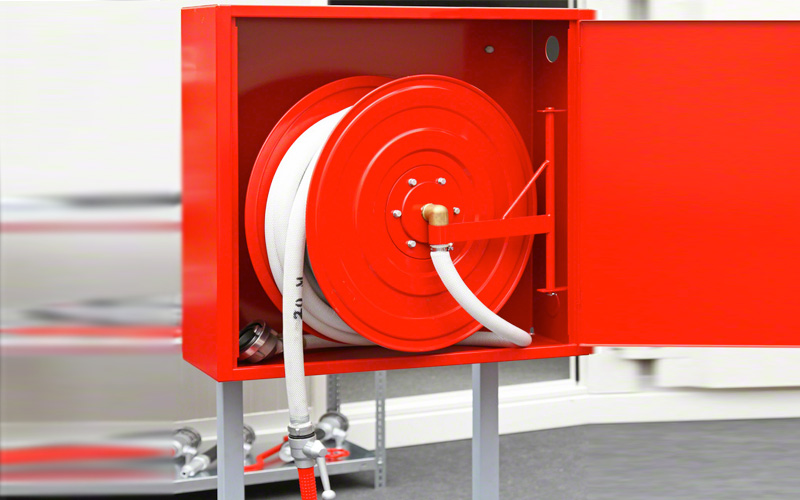
Hoses should be stored correctly in hose boxes or cabinets to protect them from moisture, sunlight, physical damage and contamination.
Hose Reels
Hose reels provide a controlled stream of water and are generally easier to operate during the early stages of certain Class A fires involving materials such as paper, wood and fabric. They must not be used on energised electrical equipment or fires where water is unsuitable.
Fire Brigade Inlet
A fire brigade inlet enables responding firefighters to pump additional water into the building’s firefighting network when required.
Fire Hydrant System Installation Process
Step 1: Site Survey and Risk Assessment
The installation process begins with a detailed inspection of the property. Fire-protection professionals study:
- Building type and total area
- Number of floors
- Occupancy and expected footfall
- Nature of stored or processed materials
- Fire-load conditions
- Entry and exit routes
- Water availability
- Electrical supply
- Pump-room location
- Access for firefighting vehicles
This assessment helps determine the appropriate type, coverage and capacity of the hydrant system in Noida.
Step 2: System Design
After assessing the site, engineers prepare the system design and layout. The plan generally identifies:
- Water-tank capacity and location
- Pump capacities
- Pipe sizes and routes
- Hydrant and hose-reel locations
- Pump-room arrangement
- Valve positions
- Drainage points
- Fire brigade connections
- Electrical control requirements
The design should follow the applicable National Building Code provisions, relevant Indian Standards, local fire-service requirements and conditions specified by the competent authority. Since requirements may vary by building use and approval category, the final design should be verified by qualified fire-safety professionals.
Step 3: Selection of Approved Equipment
Reliable performance depends heavily on equipment quality. Pumps, valves, pipes, hoses, nozzles, control panels and other components should conform to the approved specifications.
Using unsuitable or low-quality components can result in leakage, corrosion, insufficient pressure, pump failure or difficulty operating the system during an emergency.
Step 4: Pipe-Laying and Hydrant Installation
The pipe network is installed according to the approved drawing. Pipes must be properly aligned, joined, supported and protected against corrosion and physical damage.
Hydrant valves and hose reels should be located where they are visible and easily accessible. They should not be blocked by furniture, stock, machinery, parked vehicles or temporary structures.
Step 5: Pump-Room Installation
The fire-pump room is one of the most important parts of the system. Pumps, panels, suction pipes, delivery headers, valves and monitoring devices must be arranged so that inspection and maintenance can be conducted safely.
The room should remain clean, adequately ventilated, clearly identified and protected against unauthorised use. It should not be treated as a general storage area.
Step 6: Electrical and Control Connections
Fire pumps require reliable control and power arrangements. Automatic starting sequences, alarms, pressure switches and backup power provisions must be installed and tested.
The diesel pump should have adequate fuel, a functional battery system and an appropriate exhaust arrangement.
Step 7: Pressure Testing and Commissioning
Before commissioning, the complete network must be inspected and tested. Common checks include:
- Hydrostatic pressure testing
- Inspection for pipe and valve leakage
- Pump-starting sequence
- Flow and pressure measurement
- Operation of hydrant valves
- Hose-reel testing
- Alarm and control-panel checks
- Diesel-pump operation
- Fire brigade inlet inspection
- Verification of equipment labels and signage
A system should be handed over only after its performance has been verified and relevant records have been prepared.
Choosing the Right Capacity
The required capacity of the hydrant system depends on the project. A small commercial property and a large industrial facility cannot rely on the same design.
Professionals consider several factors:
- Building height and floor area
- Number of hydrants likely to operate simultaneously
- Required water flow and pressure
- Length and diameter of pipes
- Friction losses
- Hazard classification
- Water-storage duration
- Distance between the pump room and hydrant points
Undersized pumps may fail to deliver water to distant or upper-floor hydrants. Oversized pumps, meanwhile, can create excessive pressure and unnecessary installation or operating costs. Hydraulic calculations are therefore an important part of the design process.
Common Installation Mistakes to Avoid
Even good-quality equipment cannot compensate for an incorrect installation. Common mistakes include:
- Installing hydrants in obstructed locations
- Using incorrect pipe diameters
- Providing insufficient water storage
- Ignoring pressure losses
- Depending only on an electric pump
- Failing to provide adequate pipe supports
- Mixing the fire-water supply with regular water usage
- Using poor-quality valves and hoses
- Leaving the pump room poorly maintained
- Failing to test the system after installation
- Making building changes without updating fire-safety coverage
Working with an experienced company helps reduce these risks and ensures better coordination between the system design, civil work, electrical connections and firefighting equipment.
Fire Hydrant System Maintenance
Installation is only the beginning. A fire hydrant system that remains unused and untested for long periods may fail when it is needed most.
A planned maintenance programme should include:
- Inspection of water levels
- Testing of electric, diesel and jockey pumps
- Checking pressure gauges and switches
- Inspection of valves for leakage or obstruction
- Examination of pipes for corrosion
- Checking hoses, nozzles and branch pipes
- Verification of battery and fuel condition
- Inspection of control panels and alarms
- Cleaning the pump room
- Keeping access routes unobstructed
- Recording all inspections and repairs
The exact inspection and testing frequency should follow the approved fire-safety plan, equipment manufacturer’s recommendations and applicable regulatory requirements.
Training Is Equally Important
A hydrant system delivers the best results when trained people know how to use it. Security personnel, maintenance teams and designated fire wardens should receive practical training.
Training should cover:
- How to raise a fire alarm
- How to start or verify fire-pump operation
- How to open a hydrant valve safely
- How to handle a pressurised hose
- When water should not be used
- How to communicate with emergency services
- How to support evacuation without creating panic
Regular fire drills can reveal blocked routes, damaged equipment, poor communication and other weaknesses before a real emergency occurs.
Why Choose Innovative Fire Protection?
Innovative Fire Protection provides professional support for fire hydrant system planning, installation, testing and maintenance. The team assesses the actual conditions of a site before recommending an appropriate fire-protection solution.
For businesses searching for a reliable hydrant system in Noida, Innovative Fire Protection can assist with system design, equipment selection, installation, pump-room setup, testing and ongoing maintenance. The objective is to create a dependable firefighting arrangement that is practical, accessible and suited to the property’s specific risk level.
Whether the project involves a factory, warehouse, hospital, school, office, shopping complex or residential building, professional execution is essential for long-term system reliability.
Conclusion
A fire hydrant system is an important part of a building’s overall fire-safety infrastructure. It provides trained responders with a continuous and pressurised water supply, helping them control a fire and limit damage.
Successful installation requires much more than purchasing firefighting equipment. It involves risk assessment, hydraulic planning, water-storage calculations, correct pump selection, proper pipe installation, pressure testing, documentation, maintenance and staff training.
If you are planning to install, upgrade or maintain a hydrant system in Noida, consult Innovative Fire Protection for a professional site assessment. A properly designed and regularly tested system can significantly improve emergency preparedness and help protect people, property and business operations.
Frequently Asked Questions
1. Where is a fire hydrant system generally required?
It may be required in factories, warehouses, commercial complexes, hospitals, schools, hotels, high-rise buildings and certain residential properties, depending on their size, height, use and applicable fire-safety rules.
2. What is the difference between a hydrant and a sprinkler system?
A hydrant is manually operated by trained personnel using a fire hose. A sprinkler system generally activates automatically when heat reaches a specified level. Many properties use both systems as part of a comprehensive fire-protection plan.
3. Can a hydrant system operate during a power failure?
A properly designed system may include a standby diesel fire pump, allowing water delivery to continue if the main electric pump cannot operate.
4. How often should the system be tested?
Testing should follow the approved maintenance schedule, manufacturer’s guidance and applicable requirements. Pumps, valves, hoses, water levels and control systems should be checked regularly, with records maintained.
5. Can an existing hydrant system be upgraded?
Yes. Professionals can inspect the water tank, pumps, pipelines, valves, coverage and controls to identify required repairs or upgrades. Changes to building use or layout may also create a need to modify the system.
6. Who should install a fire hydrant system?
Installation should be handled by qualified fire-protection professionals familiar with system design, hydraulic requirements, equipment specifications, testing procedures and local approval requirements.



Leave a Comment