







Best Fire Alarm Systems for Apartments and Villas in India
1. Introduction: Why Fire Alarm Systems Are Critical for Modern Homes
A fire spreads in minutes—but detection takes seconds. This simple fact highlights the difference between a controlled situation and a devastating disaster. In India, the number of fire incidents in residential buildings has been steadily increasing due to factors like electrical overload, LPG leaks, and poor safety practices. Apartments and villas, especially in urban areas, are at higher risk because of dense living conditions, modern electrical usage, and lack of proper fire detection systems.
Fire safety is often misunderstood as firefighting. While firefighting deals with controlling and extinguishing fire after it starts, fire detection focuses on identifying the threat at its earliest stage. This is where fire alarm systems play a crucial role. Early detection allows residents to evacuate safely, minimizes damage, and enables faster response from emergency services.
Modern homes are evolving into smart living spaces with automation, IoT devices, and high-end electrical systems. However, fire safety is still overlooked in many residential properties. A reliable fire alarm system is no longer a luxury—it is a necessity for ensuring safety, compliance, and peace of mind.
In this blog, we will explore the best fire alarm systems for apartments and villas in India, their types, features, installation requirements, and how to choose the right system for your property. Whether you are a homeowner, builder, or society manager, understanding fire alarm systems can help you make informed decisions and protect lives.
2. Fire Safety Regulations in India for Residential Buildings
Fire safety in India is governed by the National Building Code (NBC), which provides comprehensive guidelines for construction, fire prevention, and safety systems in residential and commercial buildings. According to NBC norms, fire alarm systems are mandatory in certain types of residential buildings, especially high-rise apartments.
Buildings with a height of more than 15 meters are required to install fire alarm systems along with fire detection and suppression mechanisms. These systems must comply with Bureau of Indian Standards (BIS) regulations, particularly IS 2189, which defines the specifications for fire detection and alarm systems.
Fire safety compliance is not limited to installation. Builders and property owners must obtain a Fire NOC (No Objection Certificate) from the local fire department. This certificate ensures that the building meets all safety standards and is equipped to handle fire emergencies.
Non-compliance with fire safety regulations can result in heavy penalties, legal action, and even closure of the property. In extreme cases, negligence can lead to loss of life and irreversible damage, making compliance not just a legal requirement but a moral responsibility.
For residential societies, Resident Welfare Associations (RWAs) play a crucial role in ensuring fire safety. They are responsible for maintaining fire alarm systems, conducting regular inspections, and organizing safety drills for residents.
In recent years, authorities have become stricter about fire safety compliance due to increasing fire incidents in urban areas. This has led to a growing demand for reliable and advanced fire alarm systems in apartments and villas across India.
3. Understanding Fire Alarm Systems: How They Work
A fire alarm system is designed to detect fire at an early stage and alert occupants through audible and visual signals. The system consists of several components that work together to ensure timely detection and response.
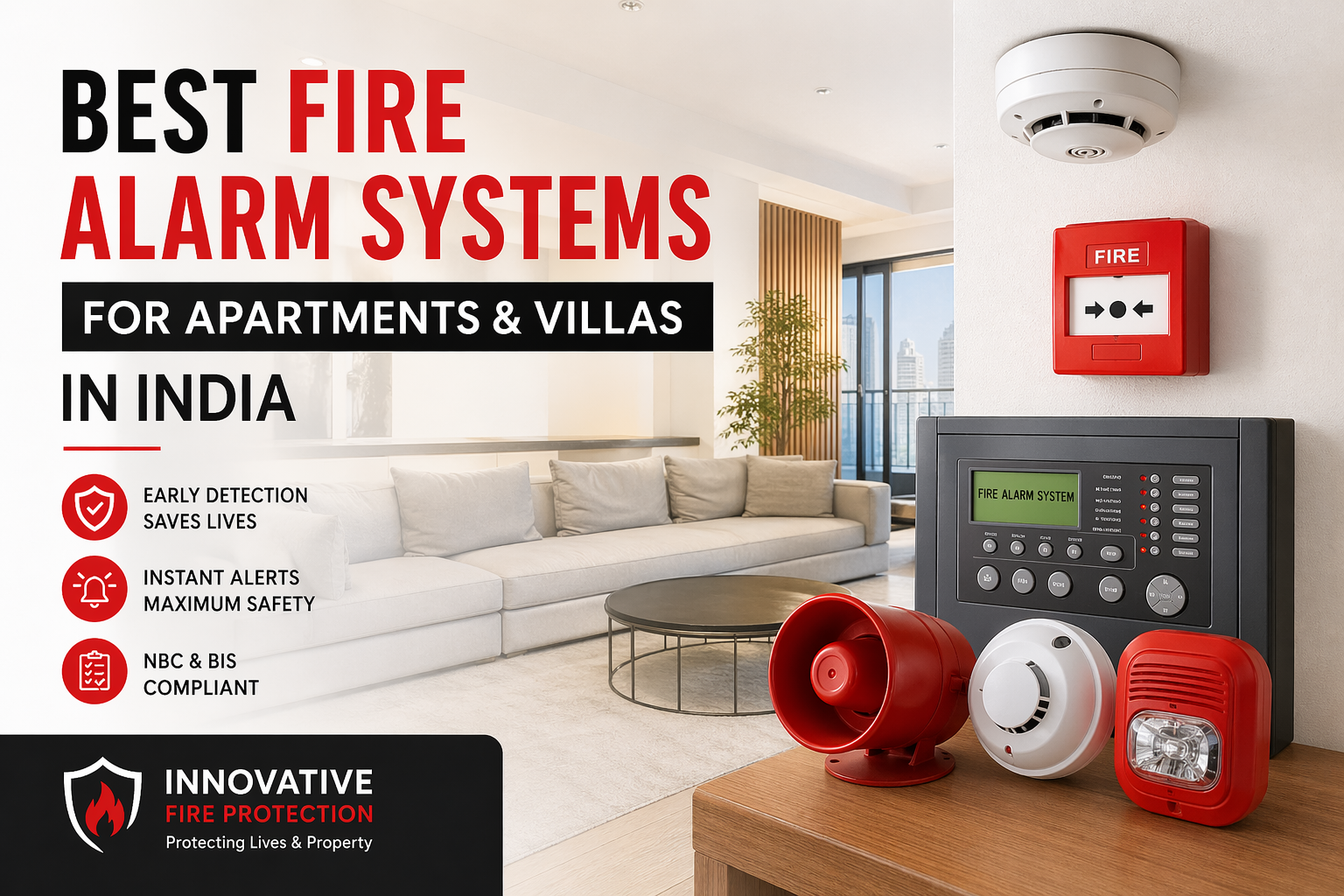
The primary components include smoke detectors, heat detectors, manual call points, control panels, and alarm devices like sirens and strobes. Smoke detectors identify the presence of smoke particles, while heat detectors respond to sudden increases in temperature. Manual call points allow individuals to trigger the alarm manually in case of fire.
The working process of a fire alarm system is simple yet highly effective. When a detector senses smoke or heat, it sends a signal to the control panel. The control panel processes this information and activates the alarm system, alerting occupants to evacuate. In advanced systems, alerts can also be sent to mobile devices and emergency services.
Fire alarm systems can be automatic or manual. Automatic systems detect fire without human intervention, while manual systems rely on individuals to activate the alarm. Most modern systems combine both functionalities for enhanced safety.
The efficiency of a fire alarm system depends on proper installation, regular maintenance, and the quality of components used. A well-designed system can significantly reduce response time and prevent small incidents from turning into major disasters.
4. Types of Fire Alarm Systems Used in India
Fire alarm systems in India are available in different types, each designed to meet specific requirements based on the size and complexity of the property.
Conventional Fire Alarm System
Conventional systems divide a building into zones. When an alarm is triggered, it indicates the zone where the fire has occurred but not the exact location. These systems are cost-effective and suitable for small apartments and low-rise buildings.
Addressable Fire Alarm System
Addressable systems provide precise information about the location of the fire. Each device has a unique address, allowing the control panel to identify the exact point of detection. These systems are ideal for high-rise apartments and large residential complexes.
Wireless Fire Alarm System
Wireless systems eliminate the need for extensive wiring, making them suitable for villas and retrofit projects. They are easy to install and offer flexibility, but may require regular battery maintenance.
Hybrid Fire Alarm System
Hybrid systems combine wired and wireless technologies, offering flexibility and scalability. They are suitable for properties with mixed infrastructure requirements.
Comparison
- Cost: Conventional < Wireless < Addressable
- Accuracy: Addressable > Hybrid > Conventional
- Scalability: Addressable and Hybrid systems are more scalable
Choosing the right type depends on factors like building size, budget, and compliance requirements.
5. Key Features to Look for in the Best Fire Alarm Systems
When selecting a fire alarm system, it is important to consider features that enhance safety and reliability. One of the most critical features is early smoke detection using photoelectric sensors, which are highly sensitive and reduce false alarms.
Multi-sensor detectors that combine smoke, heat, and carbon monoxide detection provide comprehensive protection. These systems can identify different types of fire hazards and respond accordingly.
Real-time alerts are another essential feature. Modern fire alarm systems can send notifications to mobile devices, allowing homeowners to monitor their property remotely.
Integration with other safety systems, such as sprinklers and public address systems, enhances the overall effectiveness of fire safety measures. Backup power systems ensure that the alarm continues to function during power outages.
False alarm reduction technology is also important, as frequent false alarms can lead to complacency among residents. Advanced systems use intelligent algorithms to differentiate between real threats and non-threatening conditions.
6. Fire Alarm System Requirements for Apartments in India
Apartments in India have specific fire safety requirements based on their height and occupancy. High-rise buildings must have comprehensive fire alarm systems that cover all common areas, corridors, and individual units.
Smoke detectors should be installed in corridors, staircases, and inside flats. Manual call points must be placed on each floor for easy access during emergencies. Alarm systems should be integrated with evacuation systems, including emergency lighting and exit signage.
Buildings above 15 meters require additional safety measures, such as sprinkler systems and centralized alarm panels. These systems must be regularly tested and maintained to ensure functionality.
RWAs are responsible for ensuring compliance and maintaining fire safety systems. They must conduct regular inspections, organize fire drills, and educate residents about safety procedures.
7. Fire Alarm Systems for Villas & Independent Houses
Villas and independent houses require customized fire safety solutions due to their unique layouts. Unlike apartments, villas do not have centralized systems, making individual installations essential.
Wireless smoke detectors are ideal for villas as they are easy to install and do not require extensive wiring. Heat detectors should be installed in kitchens to detect temperature spikes caused by cooking activities.
Smart fire alarm systems with IoT capabilities allow homeowners to receive alerts on their smartphones. These systems provide real-time monitoring and enhance safety.
Cost-effective solutions are available for homeowners, making it easier to implement fire safety measures without significant investment.
8. Best Fire Alarm System Brands in India
India has a wide range of fire alarm system brands catering to different needs and budgets. Premium brands offer advanced features, high reliability, and strong service support, making them suitable for high-rise apartments.
Mid-range brands provide a balance between cost and performance, making them ideal for residential societies. Budget brands offer basic functionality and are suitable for villas and small properties.
When choosing a brand, it is important to consider factors like BIS certification, service availability, and product reliability. Investing in a trusted brand ensures long-term safety and performance.
9. Smart Fire Alarm Systems: The Future of Fire Safety
Smart fire alarm systems are transforming fire safety by integrating IoT and AI technologies. These systems can detect fire hazards in real-time and send alerts to mobile devices.
Integration with smart home systems allows seamless control and monitoring. AI-based detection can analyze patterns and reduce false alarms, improving reliability.
Future fire safety systems are expected to become more advanced, with features like predictive analytics and automated emergency response. These innovations will enhance safety and reduce risks in residential properties.
10. Installation Process of Fire Alarm Systems
The installation of a fire alarm system begins with a site inspection and risk assessment. Experts analyze the property layout and identify potential fire hazards.
System design involves selecting appropriate detectors, control panels, and alarm devices. Installation is carried out by trained professionals to ensure compliance with safety standards.
After installation, the system is tested and commissioned to verify functionality. Fire NOC approval is obtained after successful inspection by authorities.
11. Maintenance & Testing of Fire Alarm Systems
Regular maintenance is essential for ensuring the reliability of fire alarm systems. Monthly inspections should be conducted to check the functionality of detectors and alarms.
Annual testing involves comprehensive evaluation and calibration of the system. Batteries should be replaced periodically to avoid failures.
Maintenance is a legal requirement and plays a crucial role in ensuring safety and compliance.
12. Common Mistakes to Avoid
Many property owners make the mistake of choosing the cheapest system without considering quality and reliability. Ignoring compliance standards can lead to legal issues and safety risks.
Poor installation and lack of maintenance are common problems that reduce the effectiveness of fire alarm systems. Training residents and conducting drills are essential for preparedness.
13. Cost of Fire Alarm Systems in India
The cost of fire alarm systems varies based on factors like building size, system type, and brand. Apartments require medium to high investment, while villas can opt for cost-effective solutions.
Installation complexity and additional features also impact the overall cost. Investing in a reliable system ensures long-term safety and value.
14. Benefits of Installing Fire Alarm Systems
Fire alarm systems provide early detection, saving lives and reducing property damage. They ensure legal compliance and may offer insurance benefits.
Quick evacuation and faster emergency response are key advantages, making fire alarm systems an essential safety investment.
15. Why Choose Innovative Fire Protection?
Innovative Fire Protection offers expert solutions for residential fire safety. With a focus on compliance and quality, the company provides customized systems for apartments and villas.
Their services include design, installation, and maintenance, ensuring end-to-end support. With a strong presence in Noida and Greater Noida, they are a trusted partner for fire safety solutions.
Secure your home before disaster strikes.



Leave a Comment